
Introduction
Type 9 is the most difficult type to understand but the best known. This text is not an introduction, it is preferable to start by a good author to get a first picture.
I decided to put together all key ideas about type 9. Bolded words are very standard vocabulary. For a healthy to average 9, the patterns described here are exaggerated on purpose. This exaggeration allows to see how patterns that seem apparently opposed are deeply connected.
In all the text, the word “instinct” must be interpreted as a kind of survival instinct with a very broad meaning, an instinct that makes sure you find a place in the world, metaphorically protecting the piece of land that feeds you. It also has a spiritual dimension. Given that for 9s, this instinct is heavily buried and cannot be expressed, better keep an open mind. The text describes the defenses but it does not elucidate what the instinct is, namely what it would be without the distortions of the type.
Description
What is anger?
Anger is fundamental to type 9. A 9 may know that he is angry or not, act out of anger often or never, his anger may be visible or not. 9’s demeanour ranges from a persona whose anger is totally removed to a grumpy attitude or a placid rage without a visible cause. The surface experience of anger is secondary. Anger is always present and shows extremely indirectly. Hence, we have to look closely at the psychic meaning and consequences of anger.
When you’re very angry, you want to destroy things, do something violent. If someone insists you do something and you don’t want to do it, anger feels natural against the external pressure. The violent impulse associated with anger means: “this idea or feeling inside me is against my instinct: eliminate it, destroy it, push it away”. Anger is like an emotional fire that eliminates what goes against one’s instinct so that we end up localized in what we want.
This functioning of anger is how personal boundaries and self-assertion in the gut center are managed. Interpersonally, it pushes people away, forbids them to trespass on our ground, allows us to trespass on theirs. It has something intimidating and domineering.
Personal boundaries
The immovable object and merging
When anger is fixated (in types 8,9 and 1), a person becomes too constantly angry, consciously or not, and thus too impermeable to any influence on him, to any bending of his perspective, both from inside and outside. He only listens to his own fixed perspective whose conviction is stenghtenned by anger and self-assertion, protecting his autonomous drive for survival. The effect of anger becomes too constant and too strong.
What is specific to type 9 is that, unlike the other gut types, anger and the management of personal boundaries are experienced as their repression. What was described as too strong in the previous paragraph now seems to have disappeared. But it hasn’t disappeared. It works below the surface and the surface is dedicated to forbid its expression. Anger is meant to protect instinctive action and for 9s, it makes action disappear from view, keeps it minimal (laziness) and disconnected from thoughts, the mind being focussed on the least important priorities or peripheral ideas.
All types have several layers. To simplify the picture, type 9 works in two layers:
- In a surface layer, type 9 avoids separation, discomfort, conflict and anger.
- At a deeper layer, almost unaware, anger (as self-assertion) causes all pressures or disturbances to be blocked and ignored
The result is a person who, at the surface, merges and accommodates with external perspectives but deeper, subconsciously, fights to neutralize them. His emotional state is rarely felt like anger directly, more like anxiety, the discomfort of an ambivalence between following a move and the diffuse feeling this move is not what he wants. The anxiety signals a latent conflict and leads to mute his own voice.
While a 9 can seem to get along with somebody’s point of view, he simultaneously forgets it: a kind of selective hearing. What he hears is chosen by subconscious motives. He seems to be willing to go with the flow, but at the same time, he makes sure nothing has any grip on him.
Because of the surface layer, he seems to exist in a state of merging, not clearly localized, with a good nature, easily fascinated by the trend around him or someone else’s opinion, most often with a “nice guy” persona. Behind it, something very different exists.

Deeper, type 9 is like an immovable object, somehow unwilling to bend or shift his beliefs or functioning. In a way, immovable beliefs tie to a well charted territory our survival relies on and we are comfortable in. A 9 looks like he “fakes” moving. At the surface he always seems to be trying something, but deeper, it’s like nothing moves. Talking to a quite fixated 9 feels like talking to a wall. A wall covered with cushions that dampens your own aggression or assertiveness. But even more puzzling: a wall that seems to be most interested by what you’re saying.
Beyond a steady routine that ensures his survival, beyond the agreement involved in making good relations, it looks externally like everything flows right through him. While such an attitude could be a healthy independent-mindedness, his attempt to form his own perspective usually does not go very far, does not allow to individuate or enrich his perception while in touch with others. It feels like somebody saying: “the only way to have a perspective is to follow one of these voices, my perspective is to not follow any”. In a word, he is stubborn.

You won’t notice this stubbornness immediately. As long as interactions are meant to make good relations, staying at the periphery of any topic, as long as no action is implied, a 9 seems to be the most open minded and willing to merge. The stubbornness appears when things need to go further, when he needs to move forward, clear out vagueness for real decisions. Good relations are fine, being supportive is ok, involvement meets a stronger resistance. At depth and like all gut types, a 9 has a compulsion towards autonomy and self-reliance. Stubbornness happens before disengaging. As a withdrawn type, he’s not wanting to spend his useful energy under anyone’s control (while paradoxically he looks like it).
But it’s not the way he usually sees it. To him, it’s mainly ok in his routine, doing his stuff, trying new things, with just an unsettling inner turmoil full of doubts that have a mysterious cause. He is blind to the external and internal pressure he resists, his reaction against it and his circling around to neutralize it. Still, he uses a huge energy just to resist. Type 9 is not detached. He has feelings like anyone, usually quite cyclothymic, but the source of the turbulence is not seen.
At the surface and for many 9w1s, personal boundaries seem to be managed as not occupying space or being apologetic in presence. They give space to others. Alternatively, 9w1s often seem to have a diffuse presence like if they existed in an undefined space. This kind of semi-withdrawal comes with a feeling of fear, especially in introverts. This specific point is the source of a deep confusion with type 5.
The conscious layer
Seeker, believer/doubter, over non-conformist
Strangely, many 9s are almost totally unaware of what I described. It’s like their consciousness exists in a place where neither the angry resistance nor the surface accommodation takes place.
While seeing the unconscious background of denial is understandably impossible, it’s hard to understand why so many 9s do not see that they accommodate. Maybe it is because they do it reluctantly, it is only something they give to the world meaning “leave me alone”. Thus, it fades out of view. They often don’t want to own this part of them.
The inner state is one of managing an omnipresent conflict, where all forces collide and need to be reconciled or neutralized. If 9s so much look for peace and comfort, it means they don’t really have it. The feeling is like trying to keep all sides happy while subtly pushing them away. Inside a 9, it is like his own voice did not have the right to speak louder than anyone else’s. He withdraws internally, he zones out into a cocoon of blankness in his head. No clear anger, no strong fear, no clear shame but a bit of all this.
A 9 may witness that he is angry but he usually loses touch with the purpose of his anger and with what happened at any moment it started to come to the surface. He sorts of mentally checks out. It’s exactly what the defenses are supposed to do. If the dots could be connected, anger and its cause, anger could not stay unconscious, the two layers could no longer exist: neither the comfort nor the rebellious resistance.
The conscious layer is a place of in-betweens and doubts, of continuous ambivalence, of seeking something that seems to fade out of view, a place of foggy ideas that, while having a certain universality and truth, are too much used to disempower and neutralize drives for motion. It appears rather unaggressive, mostly avoidant, so that the underlying role of anger is nearly invisible.
There is a kind of self-forgetting in 9s, like if their needs, their desires, their agenda, and their abilities got asleep. Since 9s fall asleep to their inner reality, it’s not rare this forgetfulness affects memory: they don’t remember. 9s are not less selfish than anyone else, but since they don’t seem to have a focus on any of their priorities, someone can come along and choose for them. It happens that 9s feel they are used and that people are selfish, leading to some resentment. It’s hard not to abuse of the good nature of 9w1s. Unlike other types who choose more consciously what they give freely and let it go, it happens that for 9w1s this debt is only unconsciously swallowed and explodes later. 9s often feel their contribution is overlooked (even when it’s not the case). It reminds a bit of type 2.
9s have the largest amount of anger of all types. Through several layers of protection against it, anger appears as a deafness and an endless backlog of rebellion: refusing to hear a given truth. When anger surfaces a bit more, it sounds to a 9 like his opinions are a justified fight against False or Evil, yet they often limit to a reaction to block ideas. Mentally, it becomes like a constant disagreement with the world, what Ichazo calls “over non-conformist“. In other words a passive-aggressive resistance turned intellectual that does not seem to be against anything clear.
His invisible rebellion often ends in some perspective that is vague (foggy) or sometimes provocatively dumb. He often mistakes his prejudices for a conviction or a personal truth, because they have the energy of self assertion coming from anger. And since ambivalent self-assertion is rarely well received, since vagueness is ignored, it creates a sense of being invisible, denied… and that anger was indeed unwelcome. It justifies more invisibility, self-effacing and avoidance but secretly feels an injustice.
As a defense, a 9 tends to think in polar opposites. It is the way anger disables ideas and inner motion. Anytime a choice needs to be made, like choosing what he wants, the two sides of the choice are turned into unreal absolutes in his mind. This way, he can disable both sides, since none have anything appealing. Sometimes he seems to stand on one side and he can appear as a temporary “fanatic” (*). It’s only to make it fail and forget it. Usually, he sees himself as being the one having balance and standing wisely at the center of all things, prudently doubting without making any arrogant claim, not getting involved without a proof that never comes, while actually he has whitewashed the middle ground that could have moved him. This constitutes the believer / doubter dichotomy.
At worst, a 9 is stuck in a stubborn ignorance of everything around him. A good image is that a 9 cannot see an elephant in the room. A 9 can be extremely arrogant at times, while he never truly loses his unassuming touch. His irritating resistance tends to make others appear angry as they try to convince him, confirming he is the one without an ego. Type 9 is often called “the ego of having no ego”. Strange as it may seem, even if his opinion is only his own, he often seems to him as coming from a non localized place and that he has no specific ego-involvement in it.
(*) The word “fanaticism” is used by Ichazo as a metaphor for type 9 when the “believer” side becomes very unbalanced, essentially too absolute assertions or expectations, but it’s nothing like (nowadays) religious or political fanatics who are not 9s.
Resistance to action
The “virtue” of type 9 is action, sometimes called “right” action or to remove the moral connotation: the action that unblocks things and leads to move forward. It is opposite to the passion of laziness, thus the virtue is what the type loses. No need to imagine avoided actions as radical or disruptive, they can be ordinary and simple. A 9 does not consciously think “I don’t want to do it”, the functioning of the fixation makes action disappear from the mind so that both what he seeks and what he consciously resists are diversions.
That’s where the key dilemma lies. The more fixated, the angrier but to step out of his fixation, a 9 has to allow anger. Should he act out of anger or not? There is no clear answer to it. But the conscious experience of anger is an opportunity to become more conscious.
In a way, a 9 needs blindness because, as a consequence of anger, it protects action: feeling localized implies that the rest disappears from the mind. For a healthy 9, the action being not much resisted, only short or little anger is enough. However, if the action is avoided, the defenses keep on building up, the blindness becomes a fog, the call for action disappears from view (in favour of routines, secondary priorities, comfort, seeking…), and the resistance becomes stronger. 9s don’t really see that they don’t act. At some point, all the energy is spent resisting. But to motivate himself, he has no choice but to look for some trigger of anger or there’s no way he can be localized. It explains the passive-aggressive personality: there’s no reason for this kind of anger except a search for a trigger for action.
If you try to help a 9, his dilemma sounds always unsolvable. Because the call for the action that matters has disappeared from the picture. The discussion tends to be only about secondary topics, disagreeing with whatever, circling around… Further than making good relation and allowing him to feel at peace with you, helping 9s is extremely challenging. You may unwillingly create more resistance than motion. By a focus on your perspective, a 9 seems to invite you to cross his boundaries and the extreme challenge is to not do it, or do it only so that he feels the inner motion he wants is his own ground.
Disillusionment and acedia
Type 9 cannot be solely explained by anger, peace, balance and personal boundaries. There is something deeper about it. We are now getting into uncharted territory: why are gut types so subjective and what does their subjectivity hide? It leads to an inevitable question: is type 9 really a positive type?
You could say that laziness and reluctance to move results from repressing one’s anger. But there’s much more to it. 9’s ignorance not only results from being torn between the perspectives of others.
The gut center is always focussed on the past. It is like an emotional memory of past wounds (serious threats to one’s survival) and past humiliations. Anyone who remembers this part of his life would be angry. It’s not that gut types think so much about the past, it’s how the emotions work. A gut type is attached to the past like we’re attached to our home, our origin, the place we belong, somehow the ground of our survival, a place we don’t want to leave but contains many latent conflicts.
It’s easier to understand for type 1: he was treated unfairly, thus he holds a grudge forever. Anger covers the deeper emotions of vulnerability and feeling hurt and at the same time keeps the story of the offense alive. For type 9, it’s more complicated.
The past wounds and humiliations a 9 experienced tend to create a mindset of constant disillusionment. A 9 imagines himself a blank sheet of paper as if life was bound to write on it, someone without a clear identity who experienced a series of disillusionments. Like if he once had naive childhood beliefs that the world was spiritual, loving, meaningful and caring and he was born in an awful place instead. And he seems to always want to cover it with an adult vision that he knows it and can’t be fooled. To do this, he replays a constant disillusioned perception of everything that always has a touch of resignation, fatalism and indifference, sometimes a sort of cynicism. From this, comes a lot of his blindness: real Love, real achievement cannot exist, cannot be a priority and cannot be paid attention to. His immobility looks like vengeance: “the world did not love me, I’m going to make it pay by not moving and not paying attention. Just the minimum to get what I need to survive, meet my own needs and that’s enough. I don’t matter, why would I care?“
The Latin word “acedia” is a notion from christian spirituality: the demon of sloth. It cannot be separated from disillusionment, they work together This text by Aldous Huxley, himself a 9, could be an interesting metaphor: Accidie . Acedia is like vengeance to the God who did not give a shit about us. This song by Roger Waters (9w1) expresses the message quite clearly: What God wants.
At this point, spiritual 9s split from anti-spiritual 9s. Spirituality is so fundamentally related to type 9, that a 9 cannot be indifferent to it, pay his tribute to it as to common beliefs. You spot 9’s domain (spirituality) like you unexpectedly walk on a mine: it’s where the accommodation stops. But it’s a long story and almost impossible to explain.
Rationalizations
The word “rationalization” is often used about type 7 for which it means something specific. Rationalization is more general, meaning a way to rephrase the neurotic behavior of a type as something consistent. It’s the way the fixation “lies”.
9s use diverse rationalizations like all types. The specificity of type 9 is that these rationalizations contain a lot of truth. Hence the “wisdom” of 9s. Only when seen in the light of the action or choice he is avoiding, all the things he could have done and didn’t, they appear as rationalizations for not moving. I am describing them here at a rather unhealthy level:
Live and let live: “you should tolerate the opinions and behaviour of others so that they will similarly tolerate your own.”. It rationalizes a situation when a 9 is resisting a necessary change or becomes dependant on other’s perspectives while not moving
Don’t rock the boat: “Any disturbance is dangerous and pushes others where they don’t want to go”. It rationalizes unnecessary self-consciousness, or blocking a situation, yet wanting to stay undisturbed as well as a resigned acceptance of False and Evil.
Go with the flow: “The best way to exist is to move with reality”. It rationalize the fact that a 9 is not moving with reality, even doing the opposite and only doing it at the surface
You cannot know for sure: “Everyone thinks differently, has personal biases, beliefs are just ideas in people’s minds, the truth cannot be known”. It rationalizes having long given up trying to know, focusing on other’s perspectives while deeply ignoring them.
People are stupid: a way of lazily oversimplifying opinions to neutralize them leads 9s to behave as if others were stupid. While indeed many people or ideas are stupid, it’s a special skill of 9s to become blind to what is not stupid, the only thing he could not passively rebel against without a risk to change. He focuses grumpily and lazily on stupidity.
Everything that claims superiority is arrogance: also based on a real tendency of human character, it’s just a way to ignore the (rare) superior sources of information. The superiority a 9 recognizes is blurred enough to have no effect on him.
I am being used: 9s often feel this any time they get involved, their energy benefits to someone else. It can be real (some 9s cannot say “no”). But it also comes from a lack of personal direction and justifies minimal efforts.
Only you can make your mind: Rationalizes not making his mind, sticking to stubborn opinions or playing dumb, provoking others to try to enforce their perspective on him.
Only you can know about yourself: Rationalizes not seeing what others see about him, and not seeing much about others (further than making good relations)
Only you can know what is good for you: rationalizes that he does not know and does not try to know, only provokes others to push him so that he can resist
In other situations, these are generally worthy principles. You’ll rarely hear a 9 send these signals when they make perfect sense. In this case, they are deeply acknowledged and don’t need to be thought or expressed. In healthy 9s, these limitations are deeply managed but don’t prevent dynamic action. As an example, this is fact of life “you cannot know for sure”. For a healthy 9, the present uncertainty will be acknowledged, used for an easy compromise with everyone involved, rounding corners with natural tolerance, agree with whoever to unblock useless resistances, and move forward with what is sure enough. Instead, a 9 under stress will only use the uncertainty to erase any previous knowledge and sit stubbornly in one place. He will forget everything and acknowledge nothing at all.
Identifying to other types
Basically a 9 can mistype as anything because he sees details about himself and cannot see his 9ness. Having a diffuse sense of self, he often seeks an identity. Enneagram types are used as substitutes for this identity like anything else. But he must choose one that does not lead to reveal his character, which would be too uncomfortable.
- Type 6: 9s are aware of being anxious (all types are anxious). For anyone, anxiety builds up with avoidance. The mistake is to see anxiety as the main problem (while it is avoidance). Type 6 is not anxiety but insecurity. “Disagreeing with the world” and the believer/doubter are easy to confuse with 6’s contradicting mind.
- Type 5: because most descriptions of type 5 actually describe a special kind of 9 (they usually mix 9w1 with things unrelated to the Enneagram like introversion, intellectual interests and a few cliches)
- Type 4: for various reasons: feeling different, focus on past traumas… and because descriptions of type 4 often rephrase secondary 9’s patterns. The #nota4 phenomenon (see John Luckovich or Enneagrammer) was an attempt to get out of this illusion but it did not leave much trace. Anyway, #nota4 essentially replaced 9 by 7 in this illusion.
- Type 2: a confusion based on self-forgetting, 9s are naturally supportive
- Type 8: self-idealization as one’s opposite
- Type 1 (rare): when they think their efforts are already a lot.
- Type 7 (rare): because they seek fun and are mischievous (and possible confounding factors like ADHD or bipolar disorder).
- Type 3 (rare): 9s are very 3ish but usually don’t see it
The bests are 9s
This text gives a negative picture of 9s, whose passive resistance seems to be debilitating. But it is only a defense and nothing prevents a 9 from being highly functioning in spite of it. The bests at almost anything are 9s. I have no explanation why, it’s just a fact.
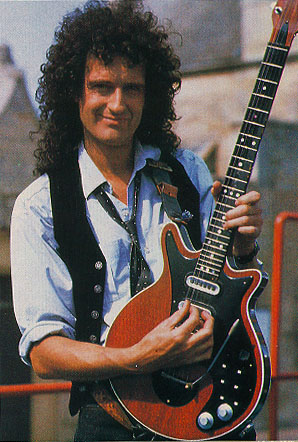
In disciplines were academic recognition is undoubtedly meaningful like physics or mathematics, all the best are 9s (Einstein, Newton, Lorentz, Boltzmann, Dirac, Pauli, Euler, Gauss, Hilbert, Godel, Pointcare…). At tennis, all best players of all times are 9s (Federer, Nadal, Djokovic, Agassi, Borg, McEnroe…). The best classical musicians are 9s (Rostropovich, Argerich…). The best classical dancers are 9s. Even though there is less elitist agreement about it, what I consider the best rock artists are 9s (examples of famous bands made of 9s only: The Beatles, Pink Floyd, Radiohead, Supertramp, Dire Straits, The Police… for solo musicians: Bowie, Hendrix, Zappa, Fripp, Marley, Cobain…). The best actors are often 9s (De Niro). The best directors are 9s (Lynch, Kubrick, Scorsese, Bergman, Eastwood…). A few other unsorted examples: Schopenhauer, Jung, Ichazo…
Talent or genius is unrelated to the ego. For 9s, maybe the ego being somehow non-localized and their being stubborn in a good way helps (working steadily on one fixed goal). The 3 > 9 arrow can have an incredible creative power. All examples given here are 9w1s, the 1 wing also plays a key role in excellence.
Note: I give only a few examples but in some cases, the rule is nearly absolute. Nearly all great physicists and mathematicians are 9w1s.
The main exception is when the culture is dominated by the Renaissance spirit: classical composers, writers, painters and poets are usually 7s. 9s were allowed to enter arts after the cultural revolution in the 60s. 9 fiction writers are still a minority compared to 7s.
Resources
I am putting here the takes of Dr. Tom (7w6) and David Gray (9w1). It provides outsider and insider visions. For the record, David Gray played a key role in uncovering some aspects of type 9 beyond mainstream and he had a great intuition to see type 9 through the confusions with types 4 and 5 in everybody’s minds (including mine), bringing him further than most author about it. As far as I can remember, typing Bjork, Einstein and Lynch as 9w1s came from him first (more or less) and were decisive steps in the right direction.
- Dr. Tom: Enneagram 9 checklist 20 key traits
- (VERY GOOD) Dr Tom: Subtypes of type 9
- Eclectic energies : Enneagram Type 9 – The Peacemaker
- David Gray: E9: The synthesist
- David Gray: Interview
- Enneagrammer: Type 9
- Ocean Moonshine: Unveiling the Enneagram – Arica 3
- Down the Rabbit Hole (good personal take focussed on acedia)
NF bias
The Enneagram and the MBTI are essentially independant: MBTI vs. Enneagram. If you know the MBTI well, you may notice my picture of type 9 is slightly biased towards NF. I tried to limit this bias but could not do it completely.
Not only S is often associated with type 9 in the litterature, but people seen as 9s are usually sensors. Furthermore, 9s tend to appear as sensors even when they are intuitives because of their grounded balance, steady pace and no-nonsense vibe. My text is instead slightly biased towards N. The kind of stubborness described here contains traces of Ni.
Most importantly, my text does not realistically describe a thinker 9. Thinker 9s can be passive agressive like any other 9s, but the avoidant rationalizations described here have to do with repressing the thinking function.
The description of type 9 by Enneagrammer, while brilliantly on target, is very biased towards NF (“fantasy” has to do with NF much more than with type 9) and mainly describes an INFJ 9.
On the other hand, some resources about Ni contain traces of type 9. The following text is an excellent picture of Ni 9 and could serve as a basis for the difference between introverted intuition and the head center: Ni Vultology. Ideas like “zone out” or this placid unimpressed gaze are at the crossroad of Ni and type 9.
 Enneagram Elements