
Introduction
Usual descriptions of type 7 are good (watch some of the resources at the end). The first grasp we get of type 7 is an enthusiastic, extraverted hedonist, an entertaining person who enjoys anecdotes and storytelling. I think of words such as “comedian”, “joker”, “entertainer”… 7s are open minded, resourceful, natural anti-depressants and don’t seem to take things seriously. This is a good picture, but it does not apply to all 7s. Let’s go a little further.
Gluttony, planning, dreaming
Gluttony is defined as wanting more. What do 7 want (more)? One usually thinks of stuff (resources, objects) or pleasant experiences (travelling, entertainment…). Many 7s are either materialist or hedonist but it is not a generality. Gluttony is not so easy to describe.
The head centre is ruled by the question: “Where am I?”. It can be seen as a radar picking up threats and opportunities. It corresponds to Ichazo’s “adaptation instinct”, our capability to adapt to any practical situation dynamically and use the most of it.
Let’s imagine a simple situation: you find yourself marooned on a small desert island. The mind centre looks around and tries to find anything you can use as a resource for survival. It finds tricks and strategies to exploit these resources productively. The mind invents ways to turn your environment into something useful and to avoid dangers.
Maybe there would be enough resources to support you with a few clever strategies but if you are a 7, you want more. This is a counterphobic reaction to the fear that the resources will be missing or that the strategies will fail. The mind remains practically oriented but it creates expensive scenarios for how to use the resources and imagines an abundance of coconuts behind the hills. 7 is not consciously a self-doubting type and as it elaborates strategies, it all seems real and promising to him. If a stranger appears, the 7 will explain his plans with great enthusiasm. Not only will he have his survival needs met, but the island will soon turn into a paradise.
This example is to be used as an analogy. It sticks to self-preservation and a raw form of resource. 7’s gluttony can extend to anything ; there is nothing specific a 7 wants more. We can think of money, some positive outcome, success, personal qualities, knowledge, solutions, love, signs of recognition… anything that anyone would consider as positive. What is common to gluttony is :
- in a given situation, gluttony wants more than is available
- the mind reframes reality as if what it wants was just around the corner
In our interconnected world, it is a richer story, a 7 can convince someone else. For head types, the practical mind is highly involved in social interactions: practical action happens through negotiation, suggestion, advices… The failure of a plan is made less direct thanks to a network of intermediaries. For example, a 7 can trade one coconut for the imaginary location where to find many.
The need for the mind to hold on to an idealistic reframing of reality requires a reinforcement of thoughts by imaginary facts and intellectual hocus-pocus. This anxious maintaining of such a wishful thinking can be called dreaming. It has nothing to do with imagination like a daydream you know to be a fantasy. The dreaming of type 7 is a confusion between imagination and reality about practical, social, and intellectual matters. Gluttony follows contexts and opportunities. “Wanting more” is not an existential expectation or fantasy, it is suggested by a situation: an opportunity.
Position and authority
Starting from Naranjo, the connection between 7 and authority has disappeared from Enneagram texts, relating it to its wings only (6 and 8), while “authority” is about type 7 itself.
One way to save one’s plan is to convince others of it. As a social extension of the practical mind, 7s have a huge power to convince people.
Many 7s are authoritarian / authoritative. A better phrasing is maybe that they have a natural authority. This word must not be given a ruthless meaning like in “authoritarian regime”. Authority as the law, the structure of a state, the Police have little to do with type 7. “Authority” is to be understood in a positive way. It is quite difficult to explain because it is omnipresent in our lives.
Authority (for 7s) can be understood as providing an adaptation of a knowledge to a situation. 7s promote ways of thinking according to which “what you have to do” or “what you have to think” is given a convincing consistency. They promote guidelines, directions that people expect to use personally to take an action or adapt to a situation: “think like this, act like this…”. Whatever the authority is about, the message must have a shape that is simple, entertaining, positive, and striking enough. People are willing to listen not because of “they must, or they should”, but because the speaker talks in a way that promises a positive and credible outcome. To have authority on people, no need for punishment or force, you just need to give a direction.
“Position” is a usually an informal position, a territory, a place, or structure where the 7 has his influence, but where sharing happens freely. Since 7s are assertive they tend to expand this territory. Authority is not only rational, it requires a bit of theatre : setting the stage, using implicit hierarchy, expressing a sense of entitlement…
Most teachers are 7s from the nursery to the university: entertaining, smart, funny, knowledgeable in a way that is easy and fun to share, challenging and verbally rewarding. 7s are also the champions of “how to” guides. They are the “experts” in management. They write bestselling books about how to be happy, succeed, communicate…
The “educator” is another style of 7ish authority. Super nanny and all her re-incarnation are 7s. This style of authority works magically thanks to a skilful orchestration behind the scenes. This can be perceived as infantilizing at times, even if rarely intentional. Doctors and nurses are often 7s too. This is related to having a natural sense of authority (on patients) while connecting knowledge to practical realities.
Authority takes an infinite number of forms from promoting one’s interests to giving practical advices. 7ish advices are usually disinterested and intelligent but they overidentify a situation they know with the situation you are facing. They assume that your functioning is the same as theirs. Their advices can be truly helpful: you may see an opportunity you didn’t see before.
Other traits
Trickster
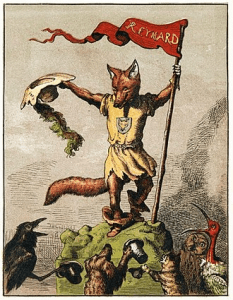
7s have a great intuition but their worldview absorbs mostly what is promising and easy to promote. They tend to select ideas that enhance their authoritative position, so that it sounds free from the limits of reality. Therefore, it is full of clever illusions.
Since 7s avoid negative states of mind, they subconsciously move away from self-doubt and the sense of indirection it could create. At the moment anyone could asks himself: “Am I wrong? Do I really know what I am speaking of?”, a 7 fills the missing holes with a creative imagination. The 7ish mind has a connecting and synthetic quality, a sort of self-stimulating energy. The connections are done so skilfully and fast that the audience cannot see when the 7 shifts from actual knowledge to invention.
Since 7s are meant to have the final say (it is not a misplaced pride, it is a reflex to be the one who gives directions), they often develop extraordinary skills to manipulate people’s thoughts. Some 7s take pleasure and amusement at convincing people of something impossible or at deceiving a large audience by a hoax. On a similar note, most professional magicians are 7s.
Visionary
While the theory says that 7’s anticipation of the future is an illusion, their capability to predict the future is above the norm. 7s are extremely sensitive to trends, they can guess what the collective thinks or wishes and adapt quickly. Many 7s are visionaries or pioneers: Charlie Chaplin, Bill Gates, Steve Jobs, Richard Branson, Elon Musk, Walt Disney, Thomas Edison, Mark Zuckerberg… The entrepreneurial spirit is a key aspect of type 7.

Existential claustrophobia
Despite being adventurous and assertive, type 7 is a fear type. Plans are a way to flee forward and the more the mind becomes at odds with reality, the more the fear grows. 7s need to feel an emergency exit. Fearing a plan is about to fail brings a sense that the walls are closing in.
Narcissism
A typical 7 has a high opinion of himself (*), exaggerates his talents and downplays his flaws but it would be exaggerated to call it narcissism.
To some extent, 2s have a high opinion of themselves, some 9s a hidden narcissism, some 1s and 4s a sense of superiority, 3s can be show-offs (7s too). But there is a special connection between narcissism and type 7. The typical narcissist is always a 7 (**). Grandiosity, high demands for admiration is one side of the story but the most revealing aspect of narcissism is the destruction of others as an attempt to save one’s superiority. This is a dark version of the inferior / superior dichotomy (the rivalry with one’s peers to have the final say). The 7’s practical intuition focusses on finding weaknesses to ridicule his rival and prove his stupidity to the world. Narcissists have an instinctive detector for other’s weaknesses and the exploitative side of 7s reveals itself in an interpersonal form. Exploitation requires to devalue what you exploit.
This description of narcissism is still a bit mild; it goes much further. Examples of 7s with strong narcissistic traits: Donald Trump, Lance Armstrong, Harvey Weinstein… Milder narcissistic traits: Elon Musk, Meghan Markle, Julian Assange… Note that an average 7 is far from this picture. A healthy 7 is even quite modest, using his charm and sense of humour to make fun of his own talents.
(*) 7s liking themselves is a surface impression from their external attitude. It is not really true. Even average 7s do not really like themselves so much. See “7 panel” in the resources. The more narcissistic, the more a 7 actually hates himself, the more he boasts and demands.
(**) Some dictators meaningfully described as narcissists are not 7s.
Resources
- (GREAT) Dr Tom’s (7w6) description of the subtypes: Enneagram: Subtypes of Type 7
- Tom Condon: All about Sevens
- Eclectic Energies: Enneagram Type 7 – The Enthusiast
- Naranjo’s description: focussed on the charlatan / narcissistic aspects
- Ichazo’s description: Unveiling the Enneagram – Arica 3
- 7 panel: Conscious TV
 Enneagram Elements