
Introduction
Type 6 is not always so well explained. Depending on sources, a few misconceptions have been added to the perception of the type. In the collective imagination, it stands next to type 4 as reactive, emotionally volatile, full of contradictions, sitting on the other side of the cold, aloof, and objective 5.
Why is type 6 so complex to get, so difficult to describe, so puzzling to type? What I am about to say should sound surprising: type 6 is rare. Yet, fixation 6 is all around us. Most people have a connection to type 6 as a wing or as an arrow. Therefore, many things we see about fear are related to type 6. What is a real 6 like? This text starts with a series of misconceptions, but all these misconceptions contain some truth.
Paranoia
During my discovery of type 6, my head was overwhelmed with questions: who is a 6, who is not a 6, are my allies against 6s also 6s? Am I surrounded by 6s, do they conspire against me, am I a 6 and I would not know?
In all descriptions of type 6, paranoia is mentioned in one way or another. A paranoid is a person who knows people are out to get him. He knows about a conspiracy aimed at taking him down. He knows people speak of him and plot behind his back. He knows the CIA has hidden some microphones in his house. To be sure of this conspiracy, he installed some microphones himself, spying on his wife, waiting for the moment she brings her lover home.
This sort of paranoia exists and if you remove the anecdote about microphones (that also exists), it is not so uncommon. Is such a person a 6? I am not answering this question yet. Are average 6s like this? We all guess that the answer is no. It is obvious that such an extreme paranoia cannot be on the same level as resentment for type 1 (being angry, holding grudges, over-perfectionist…) or pride (a sense of being irreplaceable to others…) for type 2. If it turns out to be about type 6, this paranoia must be an exaggerated image. But let’s not discard it too fast, it may lead to something worthwhile.
First suspicions
In the very first weeks I was looking for my type I considered type 6 as a possibility. I am anxious and I am a coward in many respects. I can imagine hidden intentions from others that do not exist or at least over-evaluate them. I decided to challenge my 6ness, I would let no avoidance happen about anything that scares me: a good resolution for the next few days. I started to take charge of some actions I avoided. I was attentive to fear. Was fear going to become more conscious and overwhelm me? My fists started to be tensed, my body became more rigid. No panic, but I was getting increasingly angry at myself and stuck in a compulsive self-control.
In the meantime, I started to perceive things around me. Nothing very loud but the way people think appeared to me in a slightly different light. What I am going to explain were my first impressions. Not everything I saw was type 6 but at the time, most people around me had some connection to type 6.
I noticed that people often expressed opinions, beliefs, philosophies, that were not true personal convictions. To some degree, it was a sort of gregarious thinking. We can all be wrong in what we believe. A part of our convictions or values are not based on reason or verifiable facts, they are sentiments. But the thing that appeared to me is that what 6-like people expressed was the opposite of reality in a way that did not correspond to their intelligence or knowledge of life. To some extent, it sounded like their speech was a way of self-reassurance. They were emitting an idea, waiting for the interlocutor to validate this idea by emitting a similar belief. Was it related to type 6?
What started to appear as a sign of type 6 was a certain duplicity. People expressed beliefs, ways of seeing things, good reasons but it did not correspond to their actions. It was the opposite. The more a person called himself a believer in some wonderful philosophy, the more schemes and manipulations were going on in the background. Someone gave me a good picture of this duplicity: people go to the church, and when out of the church, they return to the mafia.
When confronted, 6-like people did not reply with denial. Instead, they replied with confusion. It was some kind of debate, some friendly but defensive argumentation creating a web of complex thoughts I got lost into. The core of the contradiction could not be reached. I could see the motivation of the conversation was to create a sense of reassurance by a harmless bonding. I soon felt people’s ideas where like obstacles they throw at you to keep you occupied and confused, a bit like the victim in some cheap horror movie throws random objects at the mad killer following her. This is the way I started to make sense of the expression about type 6: “the mind fortress”. This is a good image and is a fundamental aspect of type 6.
I already saw some 9s and 1s around me and they did not do that. I could see 9’s avoidance, prejudices, and stubbornness on some occasions. It was arguably strange, but it did not correspond to the argumentative complexity I would get lost into with what I saw as type 6. The obsessiveness of type 1 trying to make his point long after anything useful is at stake could also feel strange but 1s were factually right and clear minded. It was not at all this style of argumentative confusion and fearful bad faith. I later understood that bad faith is close to type 6 but is not exactly type 6.
I often talked with my best friend about the Enneagram. He is a 9w8, very grounded, and at the time, he used to see a majority of 6s around him as well. It sounded like all his girlfriends and his relative were 6s. We both had a negative perception of type 6 as “the” crazy type. I think most people see it like this at some point. 6-like people asked for support and guidance, scared about the outcome of a minor practical thing: will the cab be on time, will the van contain enough space for our stuff, did my boyfriend look at another girl? Worrying was understandable but it took unusual proportions, panic, emergency… Panic and emergency are indeed related to type 6.
Anecdotes
My best friend had a neighbour, a very helpful man, involved in the local community. We invited him for a drink. Things were friendly, and I felt he wanted to share some opinions. At first, these opinions were normal: the young are less respectful than in the past, people lack authoritative guidance nowadays… I partly agreed and went his way. But things started to slide. It took about twenty minutes before he told us the CIA (we were in France) had an office not far away and was leading an investigation about him because his theories were threatening to reveal something. Otherwise, he seemed normal. My friend and I concluded he was a 6. This was a small mistake; this type of paranoia is only loosely related to type 6.
In Paris, every place feels a bit paranoid. People are stressed, always in a hurry, with a latent aggressiveness. Any big city creates a great deal of anxiety.
One day, I was in a bus, my small suitcase lying on the floor next to me lost balance when the bus turned around a corner and fell next to an old lady’s foot. No harm or danger. She shook with fear and anger. I could not resist the joke and said: “You know, I did it on purpose”. Shaking with fear and anger again, she replied “I know!”.
Another day, I was waiting for someone who was late, and there were a few bikes and motorbikes parked next to me. I was lost in my thoughts, and I started moving around and between the bikes, playing like a child would do. I remember a man with bright blue eyes, passing nearby and saying to me something like: “I know what you’re doing, you’re testing the limits, but I know what you’re doing!”. It was not exactly aggressive but electric. He went away and I spent some minutes wondering what he meant. I guess he imagined I was moving around the motorbikes considering stealing or damaging them.
In Switzerland, I remember a harmless kid carrying a knife like some kids like to carry a knife. I remember a woman having a conversation with him arguing that carrying a knife promoted violence and created a sense of insecurity. The kid kept on answering that he just liked to carry a knife. I thought this woman was a 6. What she said was defendable, but she was a bit irritating and it seemed inappropriate at the time. To someone living in the jungle of a big city, Switzerland looks like this:

None of people I mentioned so far were 6s. But for all of them, the behaviour showed a connection to type 6.
I had many clashes with people I believed to be 6s. Too many. I remember a young man in the Underground. It was very crowed, our shoulders bumped on one another. He thought I pushed him on purpose because he was black. I avoided the physical fight, but it took quite a lot of self-control and the help of a 9 nearby who succeeded to calm him down before he fled away.
I remember a slightly paranoid colleague of mine I considered throwing out of the window because of a blunt disrespect I could not tolerate. This disrespect sounded like a 6-like defensive accusation. Admittedly, I am quite temperamental, and I like to scare people. I hate when something is hidden on purpose and will spend all my energy to reveal it. So, while I got along very well with some “6s”, some other “6s” were my natural “enemies”. Except that none of them were 6s but I still did not know.
You’re talking to me?
At least two names come to mind when speaking about type 6: Martin Scorsese and Woody Alen. Most movies of Martin Scorsese seem to exemplify the counterphobic 6: a paranoid character played by Robert DeNiro is at the centre of the plot.
- Raging Bull: Did you fuck my wife?
- Taxi Driver: You’re talking to me?

Taxi Driver dives into the life of a nobody turning into an alienated justice maker. The movie makes fear grow and shows it in the eyes of DeNiro in a skilful manner. Anyone could end up convinced that the character is a 6 and that DeNiro is a 6. Fear and paranoia are so well rendered and understood, that it is natural to believe Scorsese is a 6.
We are misled by their talent. DeNiro is a 9w1, a grounded unassuming nice guy. Scorsese is an intellectual 9w1. They are investigating the theme of fear brilliantly. The 9ness is visible as an absence of easy judgment in the film, a strong resonance with the theme of the “nobody”, maybe as their ability to make the audience sympathise with a killer. We could argue that the 9 > 6 arrow allows them to make the movie more realistic. The script drew inspiration from Arthur Bremer’s diary who is likely to have a connection to type 6. The boxing champion Jake LaMotta who inspired the movie Raging bull was probably a 7w6.
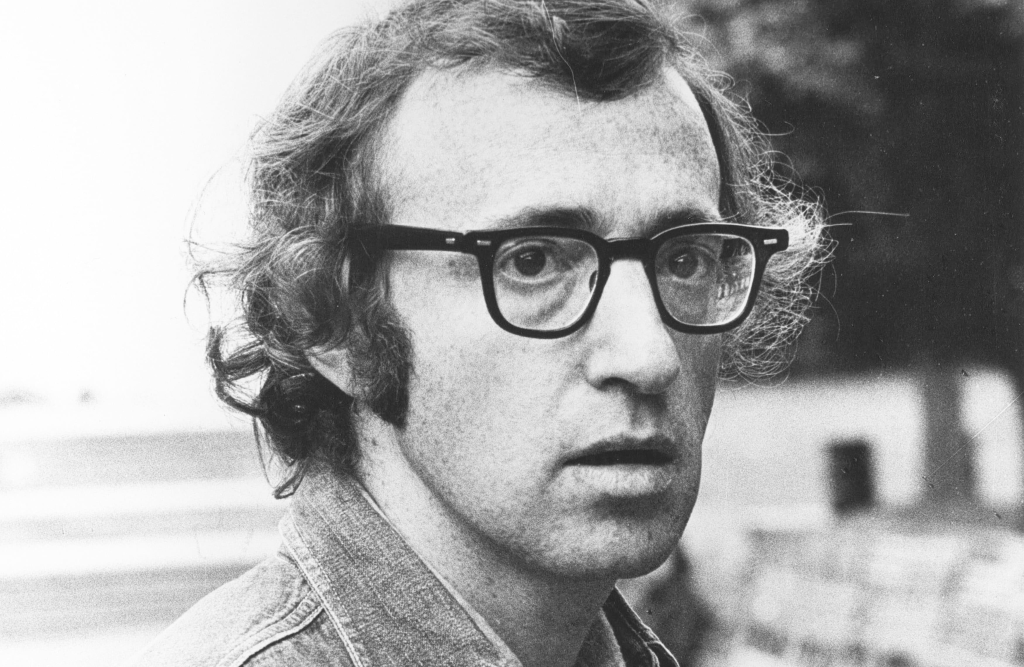
While DeNiro embodies the counterphobic 6 in movies, Woody Allen embodies the phobic 6: a nervous person afraid of everything, the champion of worst-case scenarios, the intellectualizing clown, the neurotic up in his mind… Arguably, this is an artistic creation. Woody Allen is not really like his own characters. But Woody Allen is a mind type. To get what the energy of type 6 looks like, you can watch several movies with Woody Allen. Here are a few “paranoid” scenes:
Woody Allen is not a 6. He is a 7w6: the comedian. In real life, he is slightly more assertive than a real 6. Yet, this style of 7w6 is difficult to tell from 6w7 by just reading the energy. Woody Allen’s characters exemplify the ever-shifting vacillation of the 6-like worried mind.
Yes but…
Things clarified only when I met a real 6. “6” women and I did not get along romantically well, and I would never date a 6 again I thought… until I met a woman and we fell in love. Her type was not so clear, I remember considering 1w9 and 9w1. Finally, 6w7 was settled. After reading the descriptions, she thought it was obvious. Knowing her better, it was indeed obvious: practically minded, panic, worst-case scenarios, fear of abandonment, natural cop, always in the future, vacillation, cynical, pushy/surrender, contradicting mind, playful, SP 6 warmth… and incredibly loyal. A textbook 6! Her parents gave her the nickname miss “yes but” when she was a kid. Any authoritative person we met, she argued with him.
I was scared I would one day discover her duplicity. To me, it was the unsolvable problem with a 6, the ultimate unforeseen danger. But no matter how much I questioned her, no matter how long I spied on her, no matter how many microphones I installed in the house, I could not find this duplicity. Why? Because this duplicity is not type 6. I was on a right track from the start, but I did a small mistake.
My “6s” are 7s
I knew from the start that telling the difference between 6w7 and 7w6 was difficult. Very often, when typing a person close to me, I kept on changing my mind: 6w7, 7w6? I could not tell the difference easily. At the time, Woody Allen was my archetypal 6 which may explain the confusion.
Duplicity is type 7. The duplicity of 7s is a low health aspect related to chasing opportunities: one opportunity in the foreground, one opportunity in the background (B plan). At some point, it becomes like two personalities. Many paranoid elements I could see were not type 6 but type 7 (dreaming) combined with a 6 wing and type 1.
My partner learnt the Enneagram fast, she did not care about the theory, but she soon became capable to see somebody’s type easily. Soon, the 7ish mythomania was no longer a secret for us. We got married. On one of the photographs that I kept in some drawer, there was a young woman, a “6w7” from the past, an ex of my best friend. My wife looked at it and said: “at least her type is easy to see, it’s written on her face.” “You mean 6w7?” “She’s the clearest 7w6 I can think of!”.
Rethinking everything and accepting that 7s were far more complex than the light-hearted hedonist clown I imagined (or at worst the narcissistic charlatan), it all made sense. My “enemies”, my allies, my exes, the paranoids on the street… were all 7w6s, not 6s. Duplicity, good reasons, rationalization, bad faith, authority, schemes, securitarian propaganda, territoriality, it was all 7w6. It is somehow a side of type 7 I could not see in the 7w6s I was close to, because it corresponds to less healthy levels.
The mystery about type 6 was not over yet. There was another style of 6-like person. This adorable sensitive 6 surrounds himself with a haze of elusiveness. Disarmingly sincere, he loses his interlocutor by going round in circles and covers the tracks about what he thinks. He tends to attract aggressiveness like a punching bag because he constantly asks for other’s opinions, yet never makes a clear choice. He is provocatively stubborn, sometimes arrogant, he subtly blames himself and has feelings of inferiority. Who is this mysterious 6? It will be revealed at the end of the text.
Description
The main difficulty to describe type 6 is that everyone experiences fear and that all types are based on a core fear. Many fears are not related to type 6. We could imagine that the core fears of each type are fully unconscious but I don’t think so. The fears are subconscious and often find their way to consciousness even if not in a pure form because the mind fights against them. For example for type 1, the fear of being wrong or bad, fallible, having committed a mistake… is partly conscious for most people connected to type 1. It is not only experienced as anger, it is also consciously a fear. For type 9, the sense of being undermined, of being no-one, of being rejected or ignored, is also consciously a fear.
Since I know a single 6, I based the following on this only example and very similar elements I found in dozens of 7w6s.
Ichazo’s vision is not so different from the modern understanding. There is however one important point that people undermine. Ichazo calls the mind centre the “doing group”. Being at the centre of doing group, type 6 is an action person. Other expressions to characterize the doing group is the practical ego. It is well known that type 6 is practically minded, but to understand type 6, it is important to put fear in the context of practical action. Here is small extract by Ichazo:
Ego-Cowardice, as the name suggests, is defined by fear. As the centre of the Doing Group, it wants to get things done, but it is too afraid that it lacks the ability to do things. This fixation sees danger in all things, even where there is no explicit danger. He therefore seeks safety from this danger, usually in the form of a powerful leader or an ideology. Security is a trap for this fixation. Even when Ego-Cowardice finds the security it has been looking for, it will continue to adventure past this secure spot, seeing potential threats to their safety. The passion that maintains this trap is fear. Ego-Cowardice fears everything and is constantly worried that what we do will end disastrously. It wants to go on grand journeys and to understand the world, but places limits on itself due to its fear. To break free of this fixation, the individual must muster the strength the acknowledge the fact that nothing can hurt his essence, not even physical death.
The over-adventurer starts by being a secure man. In reality he would like to have the security of the bourgeoisie, a kind of practical security in the sense that his feet are on the ground. But fundamentally he is a man of action. Though he denies to himself and to others his insatiability for adventure, and insists that he is just going to speak of his fascination with security, he will put himself into the first adventure he finds at hand.
Worst case scenarios
The clearest marker of type 6 is imagining worst case scenarios. It is most often related to the practical action the 6 is involved in. Since type 6 is a practical type, he is very involved in any practical choice, no matter if people around him want it or not.
People misinterpret “worst case scenarios” of type 6 as “getting prepared about the future”. If you plan a trip and work out all the details to avoid a bad situation, then you may be connected to type 1. This can be perfectionism and a bend towards organisation.
6s are more like adventurers. They certainly anticipate the future but in a more unpredictable and unstable fashion like 7s. They do not want risk consciously but since they are addicted to anxiety, they often get close to the risk. Worst case scenarios come from an imaginative mind that randomly anticipates possible catastrophic outcomes. It is not really like working on potential problems. Other types do it. What is specific to 6s is that they need to exteriorize the panic that their fixation creates. They do it in an embarrassing movement towards the environment, to get some reassurance that other people are involved and solidly holding the ground.
Worst case scenarios are always more or less realistic. They are supposed to shake people towards action. As such, the “paranoid” anticipation of type 6 is rarely a strange scenario unlikely to happen. It is instead a vacillating exploration of the future they cannot interiorize. But it is firmly connected to practical realities. Worst case scenarios are often used in the context of asking for guidance. Beware not to confuse asking for guidance with a focus on other people’s perspectives (“what do you think of…”) which is type 9.
As an example of false 6ness, a friend of mine (9) once lost his cell phone and was worried the batteries could explode if they got wet. What if a child found it? He wanted my opinion and needed reassurance that it would not happen. This type of worry is not so much related to type 6 because it is not connected to any action one can possibly take. The cell phone was lost in some unknown place, there was no way to recover it. This is just a worry disconnected from action. A 6 in such a case would be harnessing any possible energy and advice to find the cell phone, or more realistically would not even consider the scenario: if you lost your cell phone, somebody already stole it or threw it in the trash.
Contradicting mind
One main aspect of type 6 is an extreme verbal defensiveness. 6s disagree before considering agreeing. This is sometimes called “devil advocating” but beware that devil advocating for type 6 is not really championing the less accepted cause for the sake of the argument. Such a behaviour is more a specialty of 9s and 1s and has to do with obsessiveness, balance, and justice.
Type 6 is the contradicting mind, the defence of a pre-existing worldview selected dynamically to contradict. Whatever thought the interlocutor emits, a 6 blocks his way with a weaponry of arguments and tests. He seems to be accepting the other’s point only if it fits into a pre-existing framework fiercely defended. This defiance is a window dressing. A 6 is only wanting the other to convince and assist him, while at the surface, he seems to be laying mines and bunkers along the way. Whatever anecdote someone tells, a 6 will suspiciously insinuate into possible personal biases, and starts pointing at them, to such an extent the person may not be able to speak.
This behaviour becomes stronger and stronger as you get close to the 6 and matter to him, it usually does not invade a more casual social scene when a 6 appears more 7-like: chatty. Type 6 remains an approval seeker (like 9 and 3) and is not truly confronting. While it can be felt as very annoying, his suspiciousness is most often expressed as a rephrasing of the opponent’s ideas inviting for agreement: “what you actually mean is… “, “you say that because…. “, “don’t you think that it is…”, “I just want to understand…”, “are you sure?” and the legendary “yes but…”.
“Let’s agree to disagree” is not an option for a 6 because loyalty and practical action requires coordination, agreement, and clarity. Paradoxically, a 6 creates confusion. Whether if it is 6-like or 7-like, authority is not possible if people do not accept a common direction. A 6 cannot calm down until the agreement is reached, and facing a strong personality, he will surrender. The surrender of a 6 is obtained after a long fight, the opponent must put all he has in it. Arguments are not enough. A 6 is testing to the bitter end that you really mean it, not talking for talking. Even 7s give up long before and rationalize the disagreement away. There is never a “latent” conflict with a 6 because conflicts soon lead to a clash, the debate cannot be avoided.
Loyalty
6s are extremely loyal. It is almost impossible to realistically describe it. A 6 never lets you down. When you gain their loyalty, they are stickier than the stickiest 9, more helpful than a 2, more uncompromising than a 1, more protective than an 8, more tenacious than a 4, use more opportunities than a 7… In a word, you cannot get rid of them.
Don’t misunderstand loyalty with following blindly a leader. People who follow a leader fanatically do it out a lack of critical mind or very often, to their personal benefit. There is however a strong tendency in 6s to follow a strong leader. They will commit as an active involvement rather than a faith. This is mainly because of a sense they cannot go their own way without a guideline. The leader can be temporarily idealized, but type 6 is one of the most vigilant and critical minded types. Usually, a 6 knows very well the biases and dishonesty of the leader. 1s tend to idealize authority more than 6s because for them, perfection is a requirement to comply.
Despite a strong receptiveness to the warnings and potential dangers, a 6 remains fully involved and committed. 6s usually vacillate between loyalty and mutiny. They often prepare a revolutionary alliance ready to take the leader down.
Cop
7s have a sort of “big picture”, “introductory” or “visionary” kind of authority.
Instead type 6 is a natural cop. Anytime somebody is perceived as deviating from the plan, showing hidden motives that threaten to bypass the agreement, a 6 will put him back on track. This behaviour is extremely adaptive, it is not stained by the awkward aggression or preaching of type 1. Type 6 works hand in hand with the authority and is always involved in it. In that respect, he is at odds with type 9 who values the “live and let live” motto and is overly concerned with personal boundaries and autonomy.
Being rooted in type 9, and being connected to no other anger type, type 6 is maybe the least angry of all types (with type 3). Despite a strong involvement in authority and a compulsion to test and disagree, 6s are almost never angry. Their emotions are very embarrassing and open, without aggressiveness. The aggression is only up in the mind.
I am quite sceptical about the existence of a counterphobic 6. It sounds like a counterphobic 6 is instead a 7 disintegrating to 1 or an angry 1 or 9. The phobic and counterphobic dichotomy still exists for 7w6 disintegrating at 1. It theoretically could exist for 6s. The ideas about phobic, counterphobic and Prussian 6s by Naranjo seem to be an interpretation of cultures without a sufficient perception of the persons. I interpret phobia as fleeing away from danger and counterphobia as moving towards danger. In that respect, a 6 is always both phobic and counterphobic.
Note: real policemen are not 6s as far as I have seen.
Disambiguation
6 vs 1
1s and 6s are similar. They are both superego types and critical minded. They are both responsible and committed. 1s blame, 6s accuse. 1s correct, 6s keep under surveillance. They are both loyal and compliant. A very resentful 1 can become slightly paranoid because he needs to create reasons for his grudges. This is uncommon and mostly in unhealthy levels.
Yet, I don’t think a 1 can mistype for a 6 or the other way around: 6s don’t care about moral principles, 1s immediately recognize how important it is to them. The confusion between 6 and 1 is caused by having a connection to both types. It is the case for 9w1s who often mistype as 6. It is the case for 7w6s who more rarely mistype as 6. We tend to confuse 1 and 6 because we almost always see a combination of these types in real persons.
6w7 vs 7w6
The most clearly paranoid behaviours I could witness were from 7w6s. The main reason may be that 7s are far more common. These 7ish paranoid tendencies involve elements of the complete 7w6 connections: 5 → 7w6 → 1. We can summarize the picture like this:

Here are a few examples of the classical narcissistic/paranoid personality (a style of low health 7w6):
- Muammar Gaddafi
- Julian Assange
- Bobby Fisher
Does it mean only 7w6s can be paranoid? The forms of non-psychotic paranoia I described: an extreme sense of insecurity creating the impression people are willingly aggressing you, imagining dangerous motives out of the blue, the “CIA and microphones in the house” were all witnessed in 7w6s. It may be because 7s remember and anticipate events more creatively than 6s (fixation 7 is called “dreaming”). Arguably, the disintegration to 1 increases the aggressiveness, blame and rigidity. Does it mean it is necessarily limited to 7w6s? It is very hard to answer. I have seen hundreds of 7w6s for a single 6w7. If I look at 7w6s of the same health, they are not more paranoid than 6w7s. It is just that the huge number of 7w6s allowed me to see a much wider range of health and behaviours. Type 7 is normally a positive type, and at the same level, 7s are rather optimists even if anxious. Duplicity (two personalities, promoting the opposite of what you are doing) is only to be found in rather unhealthy 7s.
Let’s now compare 6w7 and 7w6 at the same average/healthy level of health:
- 6s are receptors like 9s and 3s, 7s are emitters like all the other types.
- 7s are territorial and assertive, 6s not at all (besides being cops which is never to their own benefit).
- 6s are always tied on an external authority. 7s not necessarily.
- 6s are powerful people readers, 7s are unaware of other’s realities and more self-centred.
Type 7 is very multifaceted and hard to get with full generality. You can read more here: type 7 and authority.
6 vs 9w1
9s identify to all types. 6 is one of them. 9s are never sure of their self-typing, it is part of their long-term indecisiveness.
There is a rumour in Enneagram communities that 6s struggle more than any other type to find their type and finally give up asking for people’s opinions. I guess it comes partly from the confusion with type 9. 9s and 6s are not so different. They are both supportive, both approval seekers, both anxious… Any 9 can see himself as a 6, mistaking his minor argumentative and cynical tendencies for something big.
The main confusion is that 9w1s are anti authoritarians (more than 6s). It is often tied to a sense their personal boundaries are walked over or non-existing. This can lead to a dystopian perception of power and authority: Pink Floyd, Kafka, George Orwell, Aldus Huxley, Radiohead, Muse, Kurt Cobain can provide an overview. It can arguably be called a “paranoid” worldview, but this worldview is mostly true. Here are a few songs that could be misinterpreted as type 6:
- Pink Floyd: Lost for words
- Pink Floyd: Paranoid eyes
- Muse: Uprising
- Nirvana: Territorial Pissings
- Radiohead: Paranoid Android
- Archive: Controlling Crowds
- Peter Gabriel: Darkness
- John Lennon: Working class hero
A paranoid cannot know he is paranoid. Anyone calling himself paranoid is very unlikely to be paranoid.
Clever 9s know that the world is an illusion for fools, we are controlled and used, we are brainwashed by a constant stream of nonsense, people blindly follow the leader. People are ignorant, promote myths…. This is no delusion, it is reality. Everyone with a certain maturity knows it. We all find a relief in the universal bond against governments, the CIA, corporate blah blah, large companies… and this never-ending list of evils.
However, the constant focus on this aspect of reality, with a possible tunnel vision and a deep anger against it is type 9: disillusionment. At some point, 9s only see idiots around because they become blind to the clever. They only see moral corruption because they lose access to those who are honest.
In healthier levels, being supportive and somehow helpful, 9s can feel very anxious as they wonder if their help is appropriate. In all the perspectives they listen to, there are contradictions. Suspicion is at times inevitable. This can lead to a certain amount of surface 6-like criticism: what people want from them does not make sense and is suspicious. This is an embryonic connection to 6 via the 9 > 6 arrow. 9s are often elusive and can feel guarded but it is only a surface impression. Getting close to them, it disappears. However, it can be difficult to get close to them.
9s can have deep issues with fear of separation and be extremely reactive to rejection. Most importantly, 9s can be extremely stubborn, which mimics the verbal defensiveness of 6s.
My main confusion was between 6 and 7. People around me did the same mistake. All the non-6/7 people I exchanged with used to see many 7w6s as 6s. However, I believe that in Enneagram communities the confusion is more between 6 and 9. The 9 -> 6 line is far more complex and confusing than it seems. Watch carefully this interesting video: 6 panel on Conscious TV. Are they 6s or 9s? The blonde woman in the video explains her long hesitation between 9 and 6.
Pointers
As I warned, type 6 is not always well understood. I tried to select what is best. All the following pointers contain a lot of truth but there are a few misconceptions. They are worth looking at:
- Type 6 by Doctor Tom (who is 7w6): Am I type 6?
- 7ish version of type 6 described visually (by a 7w6): Annoying things 6s do
- Eclectic Energies: Type 6
- Ocean moonshine: Sixes
- Ichazo’s short description (perfect but not easy to decrypt): Arica 3
 Enneagram Elements