
Introduction
In simple terms, type 2 is ego-flattery: flattering the self. Since a heart type (relation instinct) exists primarily in the relation with the other, ego-flattery exists in the context of relation. Even if it is flattering oneself, it looks like flattering others.
Let’s try to see how the fixation changes from type 9 to type 2.
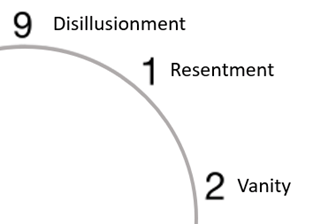
Disillusionment (type 9) creates a sense that we have been forsaken in a cold, indifferent, spiritually deserted and uncaring universe. Type 1 wants to improve things but is angry at the result. Type 2 sees himself as the solution. He is the embodiment of goodness and generosity, the nurturer of friends and lovers, the indispensable good and helping person. He is not crippled by self-depreciation or modesty. He believes he embodies (or tries wholeheartedly to embody) the kindness and nurturing the world needs.
2s are truly generous and kind. But the consequence of pride is having a recurring delusion: because I am doing this much; I deserve love much. Since no-one really loves us for what we do, the kind of love a 2 is looking for cannot be real love. Does he want to get presents, admiration, compliments? It is not clear. What he craves for is not even something real. It is a promise that cannot be fulfilled.
Like 1s, 2s are whole and sincere. Nothing about them is hidden. They are not calculating. Pride is an inflation of feelings and self-importance, that makes a 2 hold on to the idea he is greatly valuable as a caring human, not so much as having a specific talent or capability, but at the core of his dedicated and unselfish nature.
Description
Nurturing, loving, helper
Like for all heart types, the fixation is a strategy to compensate an inner sense of shame and lack of self-worth. Seeing oneself as an ultimate good person is one of them. Usually, 2s are mostly unaware of shame but it underlies their behaviour.
The presence of a 2 is not only pleasing but also nurturing. His approach is direct, embracing and valuing. He expresses his feelings openly. 2s are self-assured, not hardened, and sincere in their approach to people. The connection always bears an implicit contract: like them, you are of the same great and generous nature. The flattery extends to the connection.
2s often take the initiative to help others. They sometimes help the needy, but they become unstoppable when it comes to help a good “power figure” seen as a sort of father figure. They do not want to get anything from it, but this figure has a valuing aura that attracts their good deeds.
2s offer their help almost as an enforcement: they leave people no choice. They are seductive rather than bossy but clearly assertive in this context. You cannot easily stop a 2 trying to help you. Type 2 is not going with other people’s expectations like attachment types (3, 6, 9). A 2 often helps as a strategy to enforce the connection and to become indispensable.
Sense of entitlement
A 2 feels no reward when people value his help. Pride is above compliments. A 2 neither expects nor accepts compliments for helping others. I guess 2s crave for compliments but it is part of their repression to reject them. Yet, type 2 is the most visibly needy of the heart triad.
Thinking himself as the ultimate giver makes him prone to consider anything is owed to him without a restraint, just like (in his mind) he puts no restraint on his generosity. The idea “I am selfless, I am always the one who gives” is a recurring idea in his mind. Type 2 has a blind spot for what he receives. The very focus on other’s needs (preferably to his own) combined with pride tends to grow a neediness that is simultaneously repressed. It has a “pressure cooker” effect like the anger of type 1.
To understand this better, let’s compare to type 1. Type 1 is not expecting any personal gain from perfectionism but perfectionism causes anger to grow. When time comes for a raise or a promotion, a 1 may be extremely angered at being treated unfairly.
In a similar way, type 2 gives without expecting anything in return. But at the same time pride increases his neediness and represses his true personal needs. When time comes to be given and taken care of, a 2 cannot conceive not being given attention, given what he wants and loved without restraint. When he feels neglected, he thinks the other is awfully selfish and uncaring. Dramatic feelings explode. Shame is just underneath.
Since the self-image of a 2 is far more positive than the grounded version of type 1, a 2 expects much more from others.
Pleasing and flattering
Like all rejection types (2,5,8), a 2 feels independent of the usual authority or hierarchy between people and spontaneously bypasses it. He has a refreshing freedom that allows connections to happen on a personal basis, without any need for external references, external acknowledgement, or personal success. Being yourself is enough to be a valuable person.
Everyone allowed in the connection feels flattered, and the 2 tends to impose his conception of a good person to others. Around a 2, we often feel compelled to be more sincere and unrestrained in our caring of others. 2s prescribe their own personality values.
The pleasing attitude of 2s gives them a childlike quality that looks like type 7. The child in type 2 goes further and is to be seen as an innocent little girl enamoured with her wonderful daddy; capable to please him unconditionally. This is especially strong for the self-preservation variant called “child”.
Type 2 and love
A bit like type 7, type 2 is quite sexually adventurous. 2s are more self-assured in love than 7s, their seduction is without artifice or excess (except feelings and self-importance). They do not need to be “teasing” or use any kind of suggestive theatre. In that respect, 2s are at odds with the “femme fatale” or “womanizer” stereotype. Seduction is not “showing feathers” like in any sexual subtype, it is heart based, a nurturing and emotional approach nearly impossible to resist.
All heart types are profoundly jealous. A counter-intuitive fact is that heart types are the least jealous in relationships. They barely understand what such a jealousy is. Because of a deep jealousy, a heart type is maybe likely to steal someone else’s partner but not to experience any strong fear that someone else is being preferred to him. A possessive jealousy, angered by deceit is type 1 (SX 1 is called jealousy). A more paranoid jealousy, keeping partners and potential rivals under close watch, belongs to head types.
Being primarily connected to 4 and 8, 2s are the least visibly jealous of all Enneagram types. However, they tend to be quite unfaithful. Almost innocently so. How could so much love be contained and limited? This is not a rationalization. The good deeds of type 2, whatever they are, are naturally not contained or limited.
Disambiguation
Misconceptions
There exist a few misconceptions about type 2.
Looking for approval: Type 2 is not an approval seeker. He does not need people to validate his efforts. In some cases, he forces them to with drama (shame + neediness), but he is not getting into any kind of pre-existing mould to prove his value. 2s are mostly indifferent to compliments, especially about helping others. 2s want their interiorized father to be proud of them but it rarely shows as expecting it from an external source. Actually, it is more subtle. In a close relation, when the father starts to be projected, a 2 can pretend to become the other’s ideal. This part is a bit tricky.
Giving advice: Giving advices is often mentioned as the talking style of 2s. 2s do not give (unrequested) advises. Giving advice is part of authority and mostly a pattern of types 6 and 7. I’m not even sure a 2 would be capable to give any advice at all (other than something trivial). They are too much focussed on others for that. An advice, at least when compulsive and unrequested, is often a projection or an identification. None of these exist for 2s.
Getting is selfish: 2s do not believe they are selfish when people take care of them. In their mind, they deserve to be taken care of. Yet, they consciously focus on other’s needs. They are not self-forgetting like 9s, they instead have a blind spot about what others give to them. 2s are not conflict avoidant out of a fear of rejection. This pattern belongs to type 9 and to a lesser degree to type 6. I believe 2s have virtually no fear of rejection.
2 vs 6
2s and 6s are both super-ego types and both helpers. Type 6 is the most modest and the least touchy of all types making the disambiguation easy. 6s have far less heart energy and are far more “up in the mind”.
2 vs 7
2s and 7s can be very alike. 7s are not always people persons but they can be. In this case, telling them from type 2 can be difficult. Let’s focus on a 7 who is also a people person.
Both types tend to be hedonistic, spontaneous, they appreciate people, they are enthusiastic at people, they tend to make compliments easily, they are a little dramatic (sometimes more than a little). Type 2 is a needy nurturer, type 7 is “wonderful” and a gluttonous antidepressant. Type 2 is not less selfish than anybody else. Type 7 is not more selfish than anybody else. The only thing we could say is maybe that type 2 is consciously focussed on giving, type 7 is consciously focussed on wanting. 7s can be profoundly compassionate and helpful, they just do not base their ego on it. A 7 who happens to take care of others may feel a constant frustration he does not prioritize himself, but this does not involve pride or emotional neediness.
Type 7 can be childlike or even childish. When childlike they are magical. When childish it looks like a dissatisfied adolescent trying to piss further than the other kids (inferior / superior dichotomy). Type 2’s childlikeness is mostly pleasing and a craving to be taken care of.
For type 7, flattery can sometimes be an authority manoeuvre. Getting someone to do something is easier if you tell him he will be good at it. A famous verse by LaFontaine (a 7) says “Be advised that all flatterers live at the expense of those who listen to them”. Strategic flattery is not ego-flattery (2) but ego-planning (7).
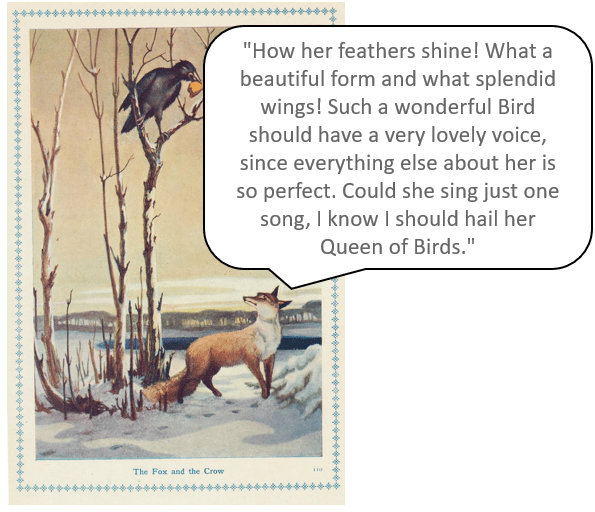
7s can idealize a lot. Idealization is almost the definition of type 7. If a 7 is into people around him, he will idealize people around him. A 7 tends to live in “candy land” and can somehow see people as “candy”. 7s often enjoy speaking of themselves positively. They can describe themselves as “wonderful” to summon wonderful feelings. Talking of any other wonderful thing has the same effect. They sometimes play games to obtain compliments in a more or less humorous way.
2s are poor at strategy or authority, it does not exist to them. They do not perceive the roles or hierarchic relations between people very much. 2s attribute value to people based on their own preferences and values, and are proudly independent of the herd in this ability. 7s not only see implicit authority and hierarchy, they also use it skilfully.
2s are slightly more grounded than 7s who are more “up in the mind”. There are things to look at about type 7 to tell them from 2s, but they are sometimes not easy to see:
- Natural authority
- Avoidance of negative states of mind
- Unrealistic idealization
- Inferior / superior dichotomy
- Very jealous in love
Finally, a note about the word “vanity”. Vanity for type 2 has a deeper meaning than in ordinary language. When you say “this guy is vain”, you may talk of ostentatious clothes, pretension, arrogance… It is at odds with type 2. It can be type 7 in some cases (not all 7s are like this, not even close).
Type 2 could sound like a narcissist. Ichazo even says that type 2 is at worst a Narcistic Personality. However, what we call a pathological narcissist (for example a sect Guru like David Koresh) is usually a pathological 7 with many layers of self-delusion, grandiosity, authoritarianism and mythomania disguised by “good reasons”: the paranoid narcissist. The “messiah complex” is not type 2, it is an opportunity to take advantage of people’s credulity (who most likely want to be lied to). Type 2 is far from being as complex as a narcissistic personality.
2 vs 9
2s and 9s are often confused with each-other. The key ambiguity is that 9s are self-forgetting and supportive. Their own needs tend to appear at the bottom of the list of priorities. Normally, this text should not create too much ambiguity: type 2 is not like this.
The behaviour of 9s with an authority figure can be very complex and vaguely mimic type 2. 9s can have a sort of “hidden narcissism” as a reversal of their sense of being overlooked. It is extremely surprising when you see it for the first time and may lead to think them as 2s or 7s.
9s have more heart energy than head types. They “talk to the soul”. The sentimentality of a 1 wing, combined with 9ish mesmerizing warmth can sometimes resemble type 2.
Notes
Type 2 seems to be rare. I have known only two persons of type 2: both SP/SX 2w1, both women. I have included a few elements from a SO/SX 1w2 woman too. This is quite a limited panel. Type 2 is often perceived with a feminine style and I cannot testify against it. I also knew a 3w2 man but the 2ish elements were less obvious. I guess my conception of type 2 is still a bit too close to type 1.
For all of these persons, pride and “vanity” is mostly visible in relation to others and to being a good, helpful, nurturing and pleasing person. It seems that “the helper” is overall a good name, even though other types can be helpers. I don’t know if it is possible for a 2 to attach his pride to something else than “the helping selfless person”, possibly to a work or a talent. I have never seen it. It is possible type 2 can attach pride to a given goal or action. Attaching self-esteem to a work or a talent seems to be more related to types 1 and 3.
I am far from being capable to relate type 2 to its domain “Health and Security” (see Arica 3). I could see elements of it, but I fear that getting into it without a sufficient understanding would bring confusion with other types. Understanding the term “over-independent” would require a deeper understanding I do not have.
Resources
- Eclectic energies: Type 2
- Dr Tom: Am I type 2?
 Enneagram Elements