
From Jung to the modern understanding
Judging functions can be defined quickly. As a summary, we can narrow down thinking (T) to logic, reason and determining if a given impersonal statement is true or false by articulating arguments in a convincing and structured manner towards a conclusion: producing a truth judgement. We can narrow down feeling (F) to a sensibility to interpersonal matters, valuing, expressing and articulating personal values in an appealing manner, determining whether something is to praise or to reprobate: producing a feeling judgement.
Perceiving functions (N and S) are more difficult to capture. This text focuses on intuition but will look at sensation to question the line between S and N. To capture N, we need to use strange words such as “vision” or “potentiality”. We often get a puzzling picture, as if N consisted in reading a crystal ball. But most intuitives are interested in rather down to earth topics from politics to psychology, natural sciences, mathematics, the society at large, people around them, what to do tomorrow…
What defines N is perceiving a hidden underlying reality, imagined as a potentiality to be revealed or to come to life, that explains and stands for direct perception, that feels at least as real as direct sensory experience. Myths, preconceptions and archetypes, as rooted in the unconscious, influence intuition more than any other function but most often, an intuitive is not aware of it.
Jung willingly described the eight personality types as caricatures. His introverted intuitive is a “fantastical crank”, a “mystical dreamer”, a “seer of vision”, a prophet or visionary artist who identifies with his vision. The modern MBTI mainstream says N is about concepts and abstraction, insight (knowing without knowing how you know), guessing where the future leads, seeing meanings behind symbols. I will combine these ideas and explain that several peculiar traits evoked by Jung are visible in introverted intuitives, even when they are less of an enigma than a mystical dreamer.
Intuition
Let’s first describe intuition independently of introversion and extraversion.
The following situation is an imaginary example used for illustration. Mister Smith lives in a small town in some good old British countryside. He’s been invited to the mayor’s table to discuss a choice that matters to all: will the municipality build a road between Mr. Willaby’s farm and the Old King pub. As the debate starts, pieces of information appear in many flavors and require Mr. Smith’s attention.

What does he perceive when he is a sensor and when he is an intuitive? Where does his attention go? Where is he looking for information? What is going on in his mind before the judging function kicks in?
What an intuitive perceives with his senses is the same as a sensor. Sensors do not have better sight or hearing. An intuitive can hear a bird sing in the forest as precisely as a sensor. He can hear conversations around him as well as a sensor. S is not truly sensory perception itself. S is a grounding in sensory reality, more weight and attention given to concrete information, a spontaneous and useful organization of it in one’s mind. With experience, a sensor knows how to deal with concrete sensory input, feels tied to concrete realistic information, confronts easily others using concrete information known to him, makes sense of everything tangible happening around him and uses it. If the distance between Mr. Willaby’s farm and the Old King needs to be known, he will find it in some reliable document, estimate it roughly himself, measure it… He needs to see himself and take the appropriate action to get or use the information. While a sensor knows an information can be useless or false, he has a much higher confidence in his ability to find the useful one if it feels tangible and concrete enough.
If their S function was totally repressed, intuitives would be interested in none of these things. While everyone around him talks, an intuitive certainly hears, he is not deaf or blind. He records events in his memory like a sensor. But all this sensory perception passes before his eyes without getting much grip on his conscious psychic activity. It all happens without the spontaneous drive to use it. It feels like a landscape passing before his eyes by a train window… To him, none of the raw information feels usable or gets his attention very much.
What an intuitive is looking at actively and consciously happens in his own mind. The raw input is taken in without getting much of his attention. As it gets in, information starts to get transformed and enriched, partly in his conscious mind by association, partly beyond consciousness. N is not interested in the concrete information in a specific situation, it needs to see further, wider, more general. It needs to link the tangible reality to something intangible, hidden in the penumbra, an irresistible maybe that bears what he considers the relevant information. About the situation at hand, an intuitive shows little interest, the only outcome of his intuition is an insight or association with little immediate practical use.
I described intuition as an extension of sense perception as if abstraction, generalities and visions were triggered by what is perceived by the senses. But now, I will take a different approach compatible with Jung’s view: intuition is a perception itself but not sense perception. Intuition is an eye seeing the unconscious in abstract ways and through inner images. While channeling unconscious representations, it feels to the intuitive like perceiving something external (that potentially exists). Such potential things appear by wondering in imagination.
The text will heavily use the words “image” and “vision“. Neither refer to something especially visual. It refers to any content of imagination. It can be visual, auditive, a sequence of events, a mood, a story, rumours, the state of affairs, a conceptual structure… anything conveyed from the unconscious.
Let’s now review a few classical aspects of intuition.
Guessing
Guessing for N is not predicting lottery results or tomorrow’s weather. What N mainly guesses is an abstract or intangible reality that stands for and explains direct perception. It can appear as a possible explanation or a possible cause and can be abstract and intangible in several possible ways.
A pedagogic example is the following. If a curtain stands in some corner of a room, a sensor will mainly see the curtain, its texture, its position, its shape… An intuitive can only think of what object hides behind the curtain. He loses interest in the object as soon as unveiled. The object is only interesting so far as it is beyond perception. An intuitive would not only think of this potential object but also of a hidden meaning: why and how this object happened to be there, why it was covered by a curtain… His imagination conveys potentialities but none of them can be confirmed.
As intuition can imagine a potential explanatory past, it can as well imagine a potential becoming. Intuition is often focused on the invisible frame underlying events, seeing concrete reality as the manifestation of a plan or process inaccessible to the senses, born in some imaginary past and heading towards some imaginary future.
The peculiarity of intuition is that, despite being only loosely supported by actual observations, it is led by an unconscious intelligence that produces guesses better than random. While N always has a random instability, it tends to infer the intangible cause or result rather well and ends up on target, by means not fully known to consciousness. Hence the name of insight: knowing without knowing how you know. But of course, N is far from infallible and can guess wrong.
The guessing mechanism of intuition is partly unconscious. However, an intuitive still remembers some stages of abstraction and generalization, before it was swallowed by the mystery of his mind. He remembers some traceable pieces of information, already transformed, generalized and selected, before his unconscious took over. His guesses do not feel completely produced out of nothing.
Concepts, abstraction, association
What concepts intuitives are into is very broad. I am only giving a small set of examples along the text.
An intuitive does not really take information from outside but from himself. He can grab an impressive amount of conceptual data, but this conceptual world must feel alive inside his mind and feed from the inspiring reservoir of his unconscious. It is in a constant state of flux by association, as if every concept or abstract idea was reinvented by his musings.
Consciously, intuition maintains a background of visions and ideas in constant motion. They are not inert and separated, bridges happen naturally between ideas. Thus, intuition tends to jump easily from an abstract observation to another, connecting seemingly unrelated domains of life, producing a broader understanding in any situation. Associations can be surprisingly creative. But sometimes an overview is not enough, shadowing fundamental difference between concepts.
Since every tangible perception is linked to an abstract conception, focusing on what is hidden, an intuitive can see two seemingly different realities as hiding the same background, and notice recurring patterns invisible to the naked eye. To him, what sounds different at the surface is explained by the same abstract vision.

If Jupiter and Neptune were close enough to be seen as disks in the sky, a pure sensor could only notice their similitude is being round and moving slowly in the sky. The colours, shapes inside the disk and esthetical sensations would be different. But imagination can expand this perception to an intangible realm, seeing them as huge mysterious round objects floating in space faraway, wondering what caused their existence and what makes them move. The mystery of their creation and the forces moving them, both intangible, soon makes these objects manifestations of the same process. On a similar note, wood and cotton feel like different matters but imagined as atoms and molecules, they are of the same kind.
N can perceive things considered as “concrete”. There is no doubt nowadays that planets are indeed big objects faraway, were formed by colliding solid elements in a collapsing gas of hydrogen that formed the Sun, and since Newton, we know the reason for their motion is inertia and gravity. While atoms were only suspected in the 18th century, they are now considered undoubtedly real and have become an ordinary element in our collective imagination.
The same could be said about people’s behaviours and interests. What people say and do sound different but if you are looking for generalities at a given moment, they soon will look the same. What psychology describes is mostly intangible: personal boundaries, sense of self, cognitive functions, psychic energy… none of this is accessible to the senses.
Paradoxical thinking
No matter the apparent conviction in an intuitive speech, ideas are a daring glimpse at the unknown. Using the word “maybe” does not seem required as already self-evident.
There is no immediate need for intuition to form consistent conclusions from perceptions, and when bumping on two irreconcilable possibilities, intuition will not prioritize rational resolution or question the reliability of perception. Instead, it appears as a stimulation to produce more visions, venture further into the unknown, leaving paradoxes behind in the flow of the mystery. The libido always leads to see more, new facets appearing to the mind.
The way most ordinary paradoxes are formed is by sliding definitions. Start a sentence by giving a word some definition implicitly and finish it by giving it a slightly different one. Soon, an apparent contradiction or mystery appears. Since the meaning given by N to words is not something rationally fixed but is tied to a myriad of visions in a state of flux, paradoxes appear more frequently. They are a special motivation for intuitives because they say: “you are required to see further”.
At some point, the irrational nature of N tends to form a peculiar kind of thinking, appearing as a stream of consciousness rather than a precise message, not considering paradoxes as dead ends, but including them as a natural element of ideas.
Symbols and meaning
You don’t need to be an intuitive to use ordinary symbols like letters or signposts. Yet, mysterious symbols for intuitive are often inspiring, because the closeness to the unconscious and the inner imagery is more active. Since the work of Jung is often focussed on esoteric traditions, we tend to relate symbols to esoteric or mystical ones, but it is rarely the kind of symbols intuitives are into.
Let’s take a simple example from elementary mathematics:

It reads: “for all x in the set ℕ of natural numbers, there is one y in the set ℕ of natural numbers such that y is greater than x”. It simply means that for all integer, there is a larger one. It is obvious and says nothing surprising.
But this sentence when read by an intuitive (who knows these mathematical symbols), is more evocative as each symbol is replaced by an inner representation. ℕ is not only a convenient letter defined somewhere in a book but evokes an infinite sequence of points on a line. The phrase ∀x∈ℕ triggers a picture of a point selected anywhere on this line. ∃x∈ℕ proceeds effortlessly to imagine a search for candidates, and y>x pictures the position relative to x of the other points across all possible candidates. This brief sentence evokes infinity; every set that possesses this property is infinite. It prepares a learner to test and reshape his inner representations in richer contexts.
This is just an example of the least esoteric kind. But you can look for symbols in many places. It’s nothing different than the curtain hiding the object. Intuition wants the meaning, the meaning behind the meaning, the origin, what caused a symbol to come to existence… and is not stopped by the limits of the senses.
Introverted intuition
It is important to recall a basic idea: Ni is not a function. N is the function. Ni a shortcut to say: “the function N under the influence of introversion”. This influence modifies how N operates, but it does not change everything. Both Ne and Ni produce insight, come with a certain creativity, abstraction, unexpected associations of ideas and absent mindedness… Introverted and extraverted intuitives may look very different to an outside observer; what the function does is similar.
Extraversion and introversion
There are two ways of defining extraversion and introversion:
- Extraverts invest their energy primarily in the external world, introverts in the internal world
- Extraverts give more importance to the object (external world), introverts to the subject (the self)
For introversion, the function takes a subjective direction so that the self feels at home, protected, freely following his existential priorities. Introversion cuts off influences or priorities suggested by the object. Instead, for extraversion, the object is a spontaneous motivation. Extraverts naturally have a fluid impact on the world, adapt to it spontaneously and in return, allow the world to have more influence on them.
If applied to N, a glimpse at the abstract and mysterious, the subject will intimately select potentialities that he likes, that suits his subjective existential purpose, that energize his mind, regardless of any impact he may have on the world and of any adaptation that would seem required to an extravert. That’s the theoretical starting point. Further than this, finding traits of Ni that can be observed as opposed to Ne is empirical. I will cover a few usual things I have read and observed.
Narrowness and convergence
Ni converges to one selected vision, Ne sticks to several possibilities simultaneously. How is that? N tries to see what cannot be seen. It can only produce snapshots of something too mysterious to be known. You could imagine it as several pictures taken from different angles of an object, each time guessing that some tangible perception is a sign of the presence of this object, that some idea is an insight into its nature.
Ni chooses one angle and one preferred vision at a given time, because the self requires a sense of unity, timelessness, and purpose. Ni tends to direct its perception towards familiar concepts, each time reinforcing the stability and sense of coherence of the vision. The priority is to find familiarity and a sense of intimate meaning, discarding angles required for adaptation to a diverse world.
For this reason, Ni looks like a judging function: it seems to make a choice as if backed by T: each inquiry into concepts seems to select some of them. But these concepts are only the preferred ones and not especially the “correct” ones. Unlike for thinkers, the personal vision tends to become increasingly mysterious, masking missing logical connections by more perception.
The purpose of N is not to find the factual truth like T. The purpose is to see the potentiality and for Ni, to give the self a sense of direction, an impulse towards a given ideal, narrow down the confusing panel of possibilities to one vision, one direction to stick to. As such, Ni needs to produce a narrower vision.
Even if narrow and convergent, the vision is never fixed. It always keeps changing and reinventing itself. Unlike a judgement (T or F), perception is not something meant to be “established” or decisive.
Metaphors and aphorisms
Because N involves a spontaneous generalization beyond a specific situation, aphorisms come naturally: a short phrase to express an important hidden truth about life. Because N needs to describe something intangible with ordinary words, metaphors are a natural way. But why are these found in Ni more than Ne? It’s not that clear.
Ne often uses simple analogies or adages, generalities agreed by most or metaphors easy to convey. What would characterize Ni is a peculiar form of it. As associations originate from an intimate experience of the abstract, a very personal way to generalize, it ends up noticing generalities people fail see or do not correspond to an average generality, neither to a preconception found in the everyman.
I have a strange example in mind. A friend of mine is INFJ and in his 20s, he made a strange observation: “women with thin fingers are manipulative”. It seems like a weird prejudice. But it is far from based on nothing. While I still don’t believe such a correlation exists, I have noticed my friend was very good at detecting a certain form of manipulativeness very early. On the other hand, he seems to have a natural dislike for thin fingers. The association was simply done subjectively, extrapolating from very few cases because it held a special significance to him. Had a woman with thin fingers not be manipulative (the way he sees it), he would not have noticed her fingers.
If you are yourself an introverted intuitive, this example is very unlikely to evoke anything to you. Such an association will sound even more foreign than to anyone else. Any association or generality produced by an introverted intuitive will seem especially unfamiliar and odd to another introverted intuitive with a different mindset, likely to provoke a stronger disagreement.
If you want noticeable aphorisms by a famous introverted intuitive, Nietzsche is an interesting example: Friedrich Nietzsche Quotes . Not sure these kinds of aphorisms are to be found in the average introverted intuitive.
Unconscious images and dreams
Introverts are, on average, more pessimistic about the external world than extraverts. Since the object does not have his preference, most introverts tend to build a rather negative picture of the world to justify turning his attention away from it.
Ni can construct formidable fantasies more appealing than real life and on the other hand, see darkness in the mundane. N always focusses on what is hidden, it sees hidden purposes and meanings. When introverted, the visions conveyed can have an element of mystery and dread altogether.
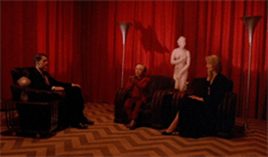
Ni is more prone than Ne to channel unconscious wholes to consciousness, typically in artistic forms or through confessions of one’s personal background and dreams. It gives a deeper intimate element to archetypes and other universal realities. A specific element of Ni (as opposed to Ne) is to identify with a vision. Under the pressure of the unconscious, an introverted intuitive has a stronger tendency to identify with what comes to his mind.
Because of a relationship of dreams to the personal and universal human dramas, what I just described in this paragraph is closer to INFJ than INTJ.
Jung’s introverted intuitive
Jung’s take on Ni is noticeably hard to read. He pushes the peculiar nature of Ni quite far. Yet it has a few invaluable insights. In this section, I will try to extract a few key ideas from Jung’s take and expand on it. These traits of Ni are directly observable and very peculiar in their manifestations, quite distinct from other personality types. But they are extremely difficult to explain.
An enigma to his surroundings
N is enigmatic by itself since it focuses on what is mysterious. We could say intuitives have an enigmatic speech when speaking of certain abstract topics. It is sometimes the case. But usually, in serious conversations, they sound mostly rational, often with a good dose of openness and intellect. Nothing out of the ordinary.
Nonetheless, the flow of images an introverted intuitive relates to himself or to the world, produces a person whose views are hard to follow. Choosing most often a view marginal to common sense, Ni tries to take on special roads to stay true to the superior importance of his preference. Since being understood practically seems secondary to him, the inner image being always more fascinating and attractive, he ventures into considerations so subjective that the most open mind gets confused. The desire to focus on a new idea or concept, on a virtual situation of his choice, takes precedence over making himself heard.
A specific mystery about Ni is that the subject is obscured in labyrinthic ways, both to himself and to others. No matter how deep and perceptive, his inner imagery has a collective origin. The only hint that reveals the self is the subjective choice of what vision he retains. This intimate choice is where you need to look for personal motivations and what is at stake for him. But even one of his personal visions, supposed to be about himself, lacks an actual experience and appears to be one more remote human potentiality. The self is not the vision but the actor in the subjective choice. Because his vision often has meaning and truthfulness, its power of fascination surpasses any attempt to pierce through the mystery of the person himself.
A cry in the wilderness
“I listened for the echo and I heard only praise” – Nietzsche
Soon Ni holds a special “truth” (an inner representation) that no-one can understand. At this point, it becomes immensely important for the subject, identified with the vision, to be understood. The vision wants to find an echo. To him, this is no strange idea but a very important aspect of life that requires acknowledgement.
Views of Ni sound a bit like a Ti statement: stubborn and superior. It differs substantially from Ti as being less precise and clear, less impersonal or blunt, lacks the certainty and boundaries of a clear conclusion and still seems to be an exploration wanting to mix with further exploration. But Ni having relied heavily on subjective preferences to select a certain worldview will not be surprised to meet incomprehension. Somehow, Ni creates the alienating misunderstanding and rejection it was expecting from the start.
A disagreement between an introverted intuitive and the rest of the world does not rely on rational absolutes but on the choice to look at certain things. His subjectivity led him to focus on certain potential situations or observations that he may assess rationally (with F or T) like everyone else would. It is simply not the situation anybody would consider spontaneously, and his frustration only results from being denied the right to look at what he wants. The disagreement cannot be rationally argued.
Even if an immersion into his vision can be the most meaningful to anyone, the views or personal situations explained by an introverted intuitive are especially difficult to answer at a surface level. It sounds from another world. It often appears as unexpected confessions to which there is nothing clear to answer. If backed by F, it has the power to convey grand personal journeys, hidden existential realities, but does not address a problem or a question at hand someone else could get involved in.
It is “a cry in wilderness” as a foreign complaint not expecting a solution (there is no “solution” to perception), not expecting an easy friendliness, wanting intellectual depth about something non rational. Hence, the confessions and views of introverted intuitives are often a remote mystery, so aloof from tangible realities that even another intuitive would feel the immediate desire to ask: “can you give an example?” or “why are you talking about this?”.
Common misconceptions
Intuitives have a poor practical mind
I sounds natural to imagine S is more practical. As a first catch, it is rather true. But it is far from being that simple. I am puzzled by the degree of practical mind of most intuitives at some selected things.
I would say that, in general, INTPs and INFPs are not practically minded for ordinary tasks of life. Not sure the same applies to dominant intuitives. I have no explanation why; it’s just the way I see it around me.
Typically, artistic INFJs can be very practically minded in everything required for shaping their visions. For a painter, it requires advanced knowledge about paints, brushes, colors, ways to paint… For musicians, skills at instruments and using electronic devices. They rarely speak about such things, but the concrete dimension is well possessed, sometimes to an extreme degree of precision.
Many intuitives are focused on a certain subtle mode of perception and aesthetics, only accessible through difficulties and advanced practical efforts. But even for everyday life, Ni do not appear “out of sorts” or “walking with the ferries” that much. Ne-users are more like it actually.
A detail: intuitives seem to be generally better at using a software where the information is not visible directly, where the result is produced by an underlying content. Computer programming is one example.
Intuitives always speak abstract
Many intuitives speak of abstract stuff, of concepts… but it is not a full generality. The best of intuition happens in a blur where words stop reflecting what is at stake. Sensors can also refer to concepts from time to time. You need to read between the lines to know what the psychic activity is at.
Many introverted intuitives veil their inner psychic activity by describing only concrete events and banal facts. It is the “weirdness” of the focus and disconnection to things truly important concretely that show something does not add up. The intent is elsewhere. David Lynch is a typical example: https://www.youtube.com/watch?v=uSP-ewdJYJc
Sports is about sensing
Maybe sports have to do with S, but the relationship to concrete objects, physical movements and the body is essentially subconscious in all sports. At least as a hobby, sensors are not more into sports than intuitives.
References
- Psychological Types (Chapter X) – C. G. Jung (1921)
- Ni : Behavior and mythology – Juan E. Sandoval
- Introverted Intuition – Alex Kingsley’s Youtube channel
- Introductory texts:
 Enneagram Elements