
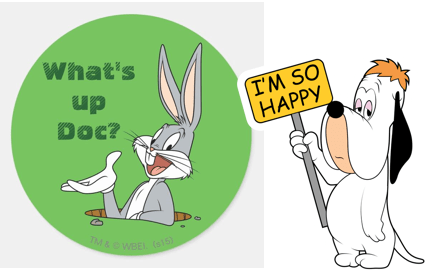
To my knowledge, there is no official text about high and low temperaments. It seems to have appeared on Stack’em up for the first time. You can read more here: The temperaments.
It is unrelated to the Enneagram itself. It is however useful during a typing process to avoid confusing expressions of a type with a low or high temperament. Temperaments can be misleading when trying to perceive a type.
The temperament is the intensity of the outward energy. 7s and 8s are usually perceived as having a high temperament, 5s and 9s a low temperament, but this is false in general.
Types have different expressions depending on the temperament. For example, a high temperament 1 shows as intensity and outward expression of what is right and wrong, a low temperament 1 shows as self-control and emotional restraint. Temperament is not introversion or extraversion. It’s not totally related to the stacks and finally, it is unrelated to health.
Taking temperament into account is useful when typing. For example, when you don’t know about it, you may be reluctant to type a reactive or intense person as a 9. When you understand it, a high temperament 9 is easier to type because the person says what he means without filter. The mindset and core beliefs of the type are expressed in a more straightforward way.
Every intermediary step exists. From low to high temperament, the following happens:
Acceleration of time: The time scale shrinks with temperament. For example, a high temperament 7 plans three minutes ahead and has issues with impulsiveness. A low temperament 7 plans years ahead and has issues with realism.
Fewer filters: Low temperaments take time to adapt their speech to what is perceived as a norm. High temperaments appear as more spontaneous and say what goes through their mind. Their intensity can sometimes be called “reactivity” leading to confusions with the reactive triad (4,6,8).
More outgoing energy: This amount of outgoing energy has nothing to do with lust (8) or gluttony (7).
 Enneagram Elements